


Plastic bricks – two words that may seem unrelated at first glance but contain a remarkable story of innovation and environmental sustainability. The development of plastic bricks as a solution is a ground-breaking move toward changing Kenya’s relationship with one of the most pervasive and problematic materials of its day as the country struggles with an estimated 600 tonnes of plastic waste generated every day, according to the United Nations Environment Programme (UNEP).
Only about 10% of this waste is collected and recycled, while the rest ends up in landfills, dumpsites, rivers, and oceans, posing serious threats to wildlife, ecosystems, and human health. But what if this waste could be turned into a valuable resource that could benefit both the environment and the economy? That is the vision of Nzambi Matee, a young Kenyan entrepreneur and engineer who founded Gjenge Makers, a social enterprise that transforms plastic waste into durable and affordable building materials.
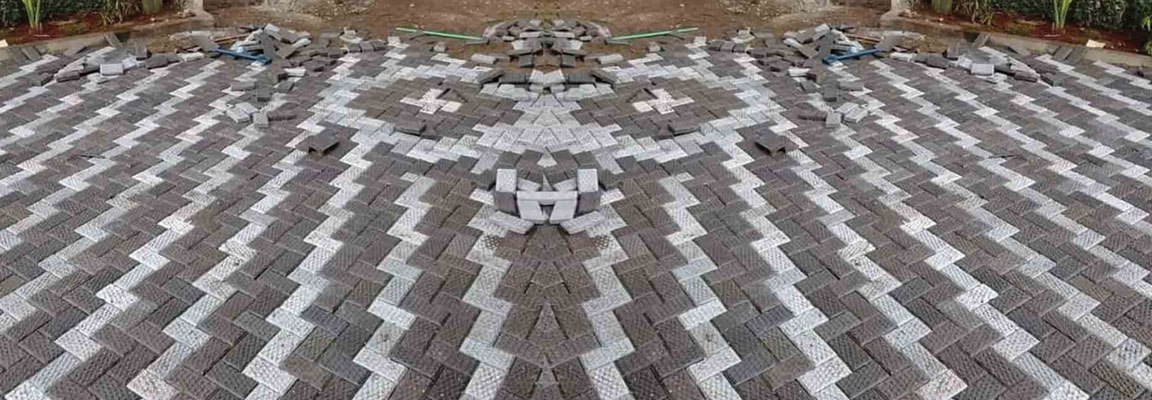
Gjenge Makers collects plastic waste from factories and individuals, sorts it by type and colour, shreds it into flakes, and mixes it with sand. The mixture is then heated and compressed into different shapes and sizes of bricks, pavers, and tiles. The resulting products are stronger than concrete, water-resistant, and have a lower carbon footprint than traditional bricks. Matee says she was inspired by her frustration with the lack of proper waste management in Nairobi, where she lives.
She also wanted to create an alternative source of income for young people who often resort to crime or drugs due to unemployment. She started Gjenge Makers in 2017 with her own savings and a grant from the UNEP. Since then, she has won several awards for her innovation, including the UNEP Young Champions of the Earth prize in 2020.
Gjenge Makers has produced over 20,000 plastic bricks so far, which have been used to pave roads, sidewalks, gardens, and schools in Kenya. The company employs 112 people, mostly women and youth from low-income backgrounds, who earn a decent wage and learn new skills. Matee hopes to expand her business to other African countries and beyond, and to inspire more people to join the circular economy movement. Plastic bricks may not be the ultimate solution to Kenya’s plastic waste problem, but they are certainly a step in the right direction.
By turning trash into treasure, Gjenge Makers is showing how innovation can create positive social and environmental impacts. As Matee says, “The future is in our hands. We have to be the change we want to see.”