


What exactly is your job/venture, and what does it involve?
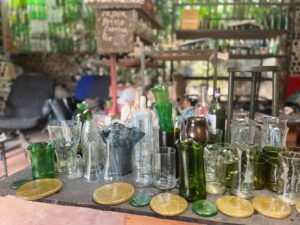
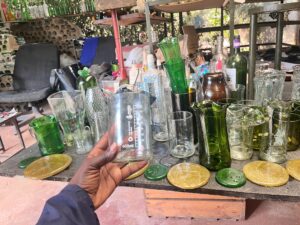
I’m the founder of Wananchi Eco Solutions, a social venture that recycles waste into useful, educational, and artistic products. We started with glass waste, one of the most neglected materials often left behind even when other waste is collected. People finish their drinks and throw the bottles away, never realizing how much value is still in them.
At Wananchi, we give that glass waste a new story. Our flagship project is transforming it into laboratory glassware like beakers, funnels, and petri dishes among others to support learning of STEM students in schools that lack basic lab equipment. So far, we’ve made functional prototypes and continue to expand, though some designs require glass-melting, which is still resource-intensive.Beyond labware, we’ve also created flower vases, drinking glasses, and decorative pieces, showing that waste can take many new forms. The goal is to grow Wananchi into a recycling and sustainability hub ,a place where people learn, create, and bring their sustainability ideas to life.
What was your academic journey like?
I’ve completed my degree in Biomedical Laboratory Technology at Makerere University, graduating in January 2026. What shaped me most was what I lived in classrooms: In my high school, we could be more than 80 students in a class, and only a few ever touched real lab equipment. Sometimes, people reached their final exams without ever using this basic labware; we mostly watched the teacher demonstrating and that was it.
It has never sat right with me up to now because science is something you learn by doing, by touching, by experimenting. So I thought, what if we could make that possible using what’s already around us? That’s how the idea was born ,to recycle glass waste into lab equipment, giving every learner a fair chance to experience science, no matter where they come from.
What are some key skills required for your job?
- Creativity and innovation.
- Problem-solving and design thinking.
- Hands-on prototyping.
- Leadership and community engagement.
What’s a hidden challenge in your role that people don’t, see?
Funding and infrastructure are constant challenges in sustainability thus building projects often happens slowly from the ground up. But an even less visible challenge is perception and cultural rigidities. In my community for example, when people see you collecting plastics, bottles, or other discarded materials from dumping areas, they often think you’re “mad.” They can’t imagine that these items could become valuable solutions. Overcoming this requires patience, persistence, and the ability to show that what seems like waste can actually create real, tangible impact. Many people see sustainability as something “extra,” instead of part of everyday living since we as humans prefer convenience to actually doing what is right . Changing that mindset takes time.
If your job had a theme song, what would it be?
“Rise Up” by Andra Day -each day brings setbacks, but you rise, rebuild, and find strength in what others discard.
What advice do you have for future changemakers?
Start. Just start. You’ll never figure it all out before you begin. Things unfold when you take the first step. It’s like swimming ,you don’t learn by standing at the edge and watching. You learn by jumping in. Once you start, everything starts connecting. Action creates clarity and opportunity.
What inspired you to pursue a career in sustainability?
What inspired me is the opportunity to turn overlooked challenges into real solutions. Before we chase far-fetched problems in theories or publications, there are everyday issues we can solve with the resources at hand. What seems like waste discarded glass, plastic for example can be transformed into tools that enhance learning and empower students to innovate. Sustainability, for me, is about creating pathways for practical problem-solving, showing that even limited resources can spark creativity, build skills, and make meaningful impact.
One Sustainability Myth, Busted?
That sustainability is a luxury. It’s not it’s a necessity and a practical path everyone can follow.
Connect with Judith on LinkedIn